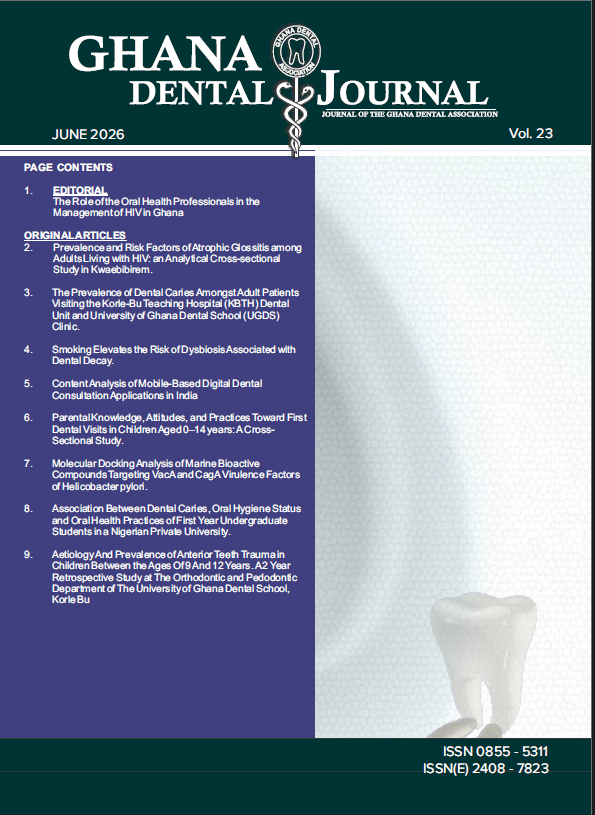
Aetiology and Prevalence of Anterior Teeth Trauma in 9–12-Year-Olds: A Two-Year Retrospective Study at the University of Ghana Dental School, Korle bu.
Keywords:
Atrophic glossitis, HIV, Oral manifestations, Prevalence, Risk factors, Anemia, GhanaAbstract
Background: Atrophic glossitis (AG), characterized by loss of filiform papillae, is associated with nutritional deficiencies and systemic disease. However, evidence among people living with HIV (PLHIV) in sub-Saharan Africa remains limited. This study assessed the prevalence, severity, and associated factors of AG among PLHIV receiving routine HIV care.
Methods: An analytical cross-sectional study was conducted among 234 HIV-positive adults attending hospital care between October 2023 and March 2024. AG was clinically graded on a 0–4 scale. Sociodemographic, clinical, nutritional, laboratory, and behavioral data were collected through interviews and clinical assessment. Associations with AG were evaluated using bivariable and logistic regression analyses, with results reported as odds ratios (ORs) and 95% confidence intervals (Cis).
Results: The prevalence of AG was 25.5% (95% CI: 20.1–31.6%). Among affected participants, 67.8% had mild disease, while 22.1%
had severe to profound AG. AG was significantly associated with male sex (OR 2.44; 95% CI: 1.31–4.55), lower educational attainment (OR 2.55; 95% CI: 1.20–5.41), and poor oral hygiene (brushing ≤once daily; OR 4.51; 95% CI: 2.08–9.77). Severe anemia and recent weight loss were also associated with markedly higher AG prevalence.
Conclusion : AG affects approximately one in four PLHIV and is associated with indicators of nutritional and systemic compromise.
Integrating routine oral examination, nutritional assessment, anemia screening, and oral health promotion into HIV care may improve early detection and patient outcomes.